
Last updated September 25, 2026
Free written scope consultation - allowances, timeline, and change-order rules on paper before a single trade is scheduled




 Before
 After
After Before
 After
After Before
 After
AfterKitchen Remodeling Maintenance Checklist for Fort Lauderdale Homeowners
Grout joint failure in coastal kitchens typically appears between months 9 and 14 - long after the contractor has been paid and long before most homeowners think to look. Salt-laden humidity cycles in Fort Lauderdale expand and contract tile substrates at a rate roughly 40% higher than inland installations, which means the maintenance window that matters most is the first 18 months after your kitchen remodel is complete. This guide treats that window as a diagnostic tool, not a cleaning schedule. You’ll learn what to inspect, when to inspect it, and how to document what you find so the condition of your investment is never in question.
Quick Answer
A proper kitchen remodeling maintenance checklist for Fort Lauderdale homeowners focuses on the first 18 months after completion, with monthly inspections of caulk joints, cabinet hardware, and under-sink fittings; quarterly testing of exhaust fan CFM output; semi-annual resealing of stone countertops with moisture-rated silicone sealers; and continuous documentation in a home improvement log that supports insurance claims and resale disclosures under Florida law. The coastal environment here - salt air, humidity swings from 65% to 95%, and the occasional tropical system - accelerates wear on finishes and mechanical connections that inland guides simply don’t address.
Table of Contents
- The First 18 Months: A Month-by-Month Inspection Schedule
- Testing Your Exhaust Fan CFM Output
- Cabinet Finish Categories and Humidity Resistance
- Re-Sealing Granite and Quartz Countertops in High Humidity
- Documenting Maintenance for Insurance and Resale
- Material-Specific Care for Common Fort Lauderdale Installations
- Common Mistakes to Avoid
- When to Call a Professional
- Frequently Asked Questions
 Before
 After
AfterThe First 18 Months: A Month-by-Month Inspection Schedule
Most kitchen remodeling maintenance guides treat all timeframes equally. That is a mistake in Fort Lauderdale. The first 18 months after completion is when installation defects, material incompatibilities, and environmental stress reveal themselves. We’ve delivered over 4,000 projects since 2007, and our photo records show a clear pattern: the majority of callbacks in coastal kitchens occur in this window, and the majority of those could have been caught by a homeowner with a checklist and a flashlight.
Here’s the schedule we recommend, organized by what to check and why the timing matters.
Months 1-3: Settlement and Cure
New cabinets, countertops, and tile are still settling into their final positions. Humidity during this period affects how materials cure.
- Week 2: Check all caulk joints at the countertop-to-backsplash seam. Look for gaps, shrinkage, or discoloration. In Fort Lauderdale, we specify 100% silicone caulk with mold-resistant additives (not acrylic latex) at this seam because acrylic shrinks measurably in the first 30 days of high-humidity exposure.
- Month 1: Open and close every cabinet door and drawer 10 times. Listen for squeaks or catches. Check that all screws in hinge plates are tight - humidity causes wood expansion that can loosen fasteners in kitchen remodeling in Fort Lauderdale installations, particularly in lower cabinets where floor moisture is highest.
- Month 2: Inspect under-sink supply line fittings with a dry paper towel. Wipe each connection; any moisture indicates a fitting that needs tightening or replacement. Compression fittings, common on quick-install faucets, are particularly prone to slow seepage during thermal expansion cycles.
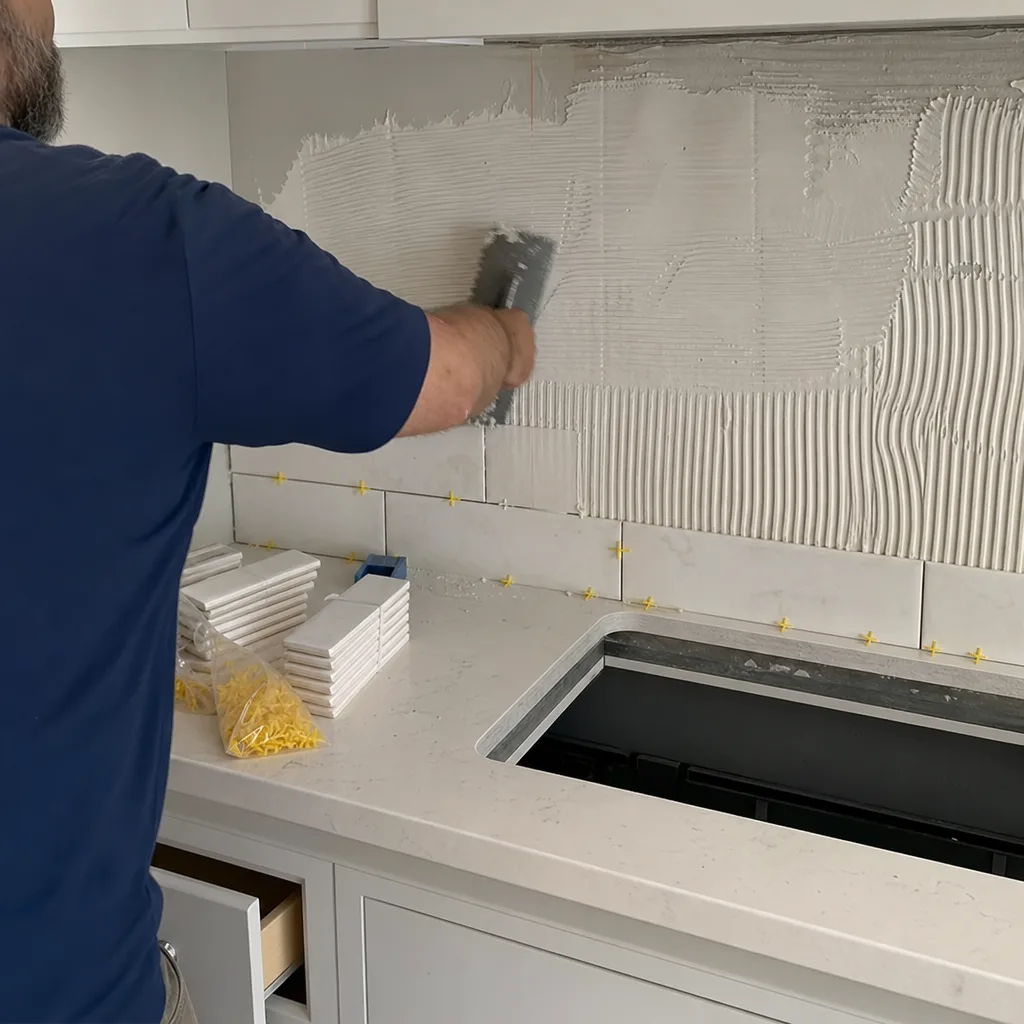
- Month 3: Check grout joints in the backsplash for hairline cracks. Tap tiles lightly with a coin; a hollow sound indicates inadequate thinset coverage that humidity cycling will eventually loosen.
Months 4-9: The Stable Period
If the installation was correct, this period should be uneventful. The danger is complacency.
- Monthly: Re-check under-sink fittings. Salt air accelerates corrosion on brass and zinc-alloy fittings, which can cause microscopic surface degradation that loosens seals.
- Monthly: Run your hand along the bottom edge of wall cabinets near the range or cooktop. Grease-laden humidity in Fort Lauderdale kitchens condenses on cooler surfaces; early accumulation feels tacky before it becomes visible.
- Quarterly: Test exhaust fan performance (see next section).
Months 10-14: The Failure Window
This is where our opening statistic matters. Grout joint failure, caulk separation, and cabinet finish delamination most commonly appear now.
- Month 10: Inspect all grout joints with a magnifying glass. Look for powdery residue (indicating efflorescence from moisture migration) or cracks wider than 1/16 inch.
- Month 12: Check cabinet box fasteners in lower cabinets, particularly the toe-kick area and the cabinet floor itself. Use a screwdriver to verify screw tightness. In Victoria Park and Coral Ridge homes we’ve worked on, the combination of original 1950s slab construction and modern cabinetry creates a thermal bridge that condenses moisture on the cabinet bottom.
- Month 14: Examine painted MDF cabinet doors at all corners and edges. Humidity cycling causes MDF to expand and contract at a different rate than its surface coating; edge checking (tiny cracks at corners) is the first visible sign.
Months 15-18: Baseline Establishment
By month 18, you should have a clear picture of how your specific kitchen performs in your specific home. Document everything. The condition at month 18 becomes your baseline for all future maintenance comparisons.
Testing Your Exhaust Fan CFM Output
Kitchen exhaust fans in Fort Lauderdale work harder than their inland counterparts because they must remove not just cooking byproducts but also the excess humidity that enters through open windows and patio doors during the eight months of the year when air conditioning runs intermittently. An underperforming fan accelerates finish degradation, cabinet warping, and mold risk.
The ASHRAE 62.2 standard specifies a minimum of 100 CFM (cubic feet per minute) for a 200 square foot kitchen with standard ceiling height. For a 250 square foot kitchen, the minimum is 125 CFM. Most builders in Fort Lauderdale install 80-110 CFM units to meet code minimums, but code minimum and adequate performance are not the same in a coastal environment.
The Tissue Test: A Field Verification Method
You don’t need a calibrated anemometer. The tissue test gives a pass-fail indication that correlates well with professional measurement.
- Turn on the exhaust fan to its highest setting.
- Hold a single sheet of toilet paper or a lightweight tissue against the grille.
- A fan meeting the 100 CFM minimum will hold the tissue firmly against the grille without sagging or fluttering to the floor.
- If the tissue falls immediately, the fan is underperforming. If it holds but flutters at the edges, the output is marginal - probably 60-80 CFM.
We document CFM ratings on every kitchen remodeling in Fort Lauderdale project spec sheet. If your fan is marginal, replacement with a 150 CFM unit (ducted properly, not recirculating) is the fix. Recirculating fans, common in condo renovations along the Intracoastal, do not remove humidity - they only filter particulates. In Fort Lauderdale’s climate, that is insufficient.
Cabinet Finish Categories and Humidity Resistance
Not all cabinet finishes tolerate Fort Lauderdale’s environment equally. When we specify cabinetry from KraftMaid or Wellborn for coastal installations, we select finish categories based on the home’s proximity to open water, its ventilation patterns, and the homeowner’s maintenance discipline.
Four Finish Categories, Ranked by Coastal Suitability
1. PVC-Wrapped (Best)
PVC-wrapped doors, sometimes called vinyl-wrapped or thermofoil’s more durable cousin, use a thicker polyvinyl chloride film over an MDF or engineered wood substrate. The wrapping extends to all edges, creating a complete moisture barrier. KraftMaid’s PVC-wrapped lines carry a limited lifetime warranty against delamination when installed in conditioned spaces. We’ve never documented a PVC-wrapped failure in a properly ventilated Fort Lauderdale kitchen.
2. Thermofoil (Good with Caveats)
Thermofoil uses a thinner PVC or PET film, heat-fused to MDF. The weakness is the edge seal - if the edge banding lifts even slightly, humidity enters the MDF core and causes irreversible swelling. In our photo records, thermofoil edge failures in Fort Lauderdale cluster in homes within 0.3 miles of the ocean, where salt air concentration is highest. Wellborn’s thermofoil lines specify “interior use only” and exclude coverage for installations within one mile of salt water in some warranty language - check your specific documentation.
3. Painted MDF (Moderate, Requires Maintenance)
Painted MDF offers the most design flexibility but the least humidity tolerance. The paint film is breathable; moisture migrates through micro-pores, causes substrate expansion, and eventually produces the edge checking described in the month-14 inspection. We specify painted MDF only for upper cabinets in well-ventilated kitchens, and we include a maintenance schedule in the project documentation.
4. Solid Wood (Variable by Species)
Solid wood cabinets move with humidity - they expand and contract across the grain. In Fort Lauderdale’s 65-95% relative humidity range, this movement is substantial. Hard maple and cherry are relatively stable; oak and hickory move more. The critical factor is construction: frame-and-panel doors with floating panels accommodate movement; slab doors crack. We document wood species and expected seasonal movement on every solid wood specification.
Warranty Language to Verify
Request the full warranty document, not the summary card. Look for:
- Exclusions for “excessive humidity” - and whether the manufacturer defines excessive (some don’t, which makes enforcement impossible).
- Proximity exclusions for coastal installation.
- Required maintenance (some warranties require annual inspection by a qualified technician - know this before you need it).
Re-Sealing Granite and Quartz Countertops in High Humidity
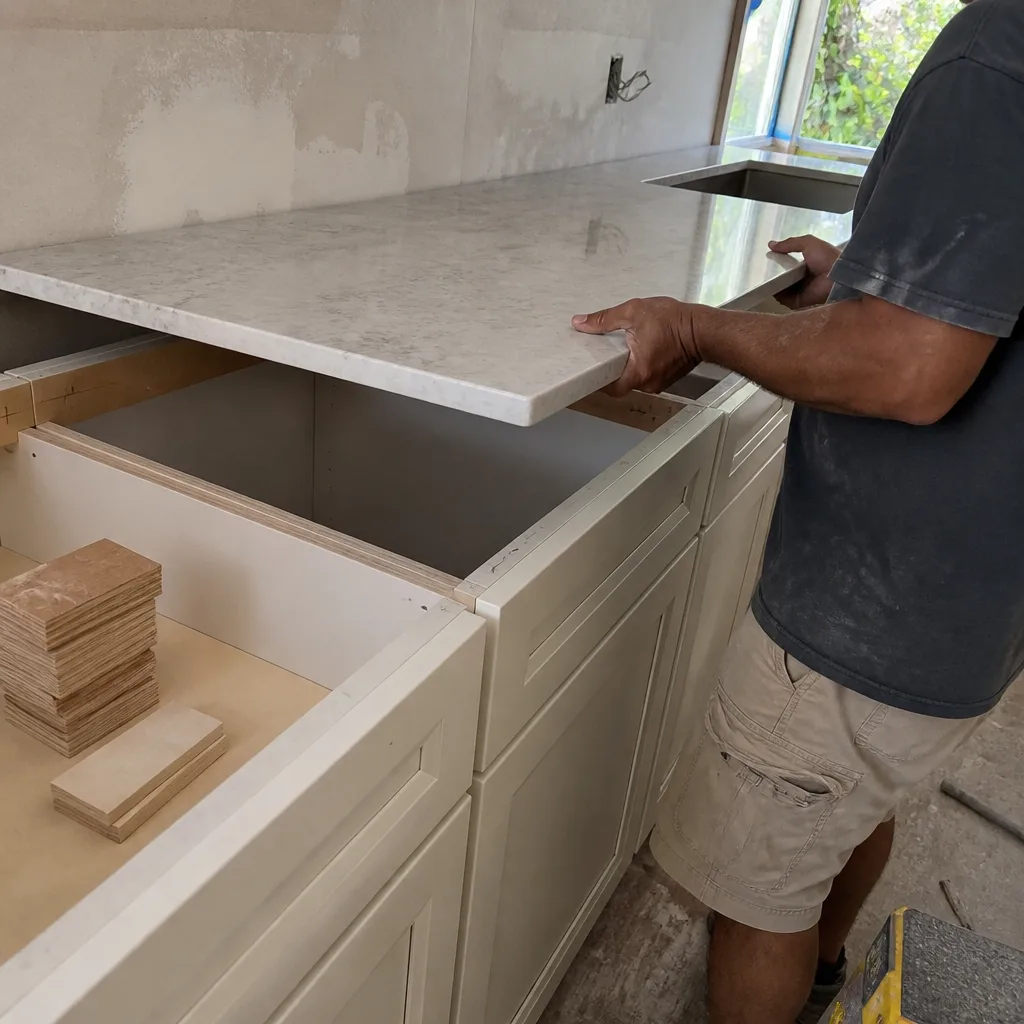
Granite and quartz countertops in Fort Lauderdale kitchens face a sealing challenge that inland guides ignore: the humidity itself degrades sealers faster. A sealer that lasts 12-18 months in Denver may last 8-10 months here because constant moisture exposure hydrolyzes the polymer bonds in lower-grade products.
Sealer Selection: The Moisture-Resistance Rating That Matters
Not all sealers perform equally in humid environments. We specify products with documented moisture-resistance ratings for coastal installations.
| Sealer | Base Chemistry | Moisture Resistance | Reapplication Interval (Fort Lauderdale) |
|---|---|---|---|
| Tenax Hydrex | Silicone-based | High - rated for continuous moisture exposure | 12-18 months |
| Aqua Mix Sealer’s Choice Gold | Fluoropolymer-modified silicone | Very high - specifically tested in 85%+ RH environments | 18-24 months |
| Generic “penetrating” sealer | Silane/siloxane | Moderate - adequate for intermittent moisture | 6-8 months |
The Correct Re-Sealing Sequence
- Clean aggressively: Use a pH-neutral stone cleaner, not dish soap (residue interferes with adhesion). Dry completely with lint-free cloths. In Fort Lauderdale humidity, “completely dry” takes longer than you think - use a fan for 30 minutes.
- Test for existing sealer: Sprinkle water on the surface. If it beads, some sealer remains; if it darkens the stone in 10 minutes, the stone is unprotected. This test tells you whether you’re maintaining or restoring.
- Apply thinly: More is not better. Excess sealer pools in low spots and cures to a hazy film that requires mechanical removal. Apply with a microfiber applicator in overlapping strokes.
- Dwell, then buff: Let the sealer penetrate for the manufacturer’s specified time (typically 15-30 minutes). Buff thoroughly with clean, dry microfiber. Any residue left on the surface becomes a sticky attractant for dust and grease.
- Cure before use: Most silicone-based sealers require 24 hours without water contact. Plan accordingly - this is a weekend task, not a Tuesday evening one.
Quartz countertops marketed as “never need sealing” still benefit from this protocol. The resin binder in quartz is not immune to humidity degradation; a light application of Aqua Mix Sealer’s Choice Gold every 24 months protects the binder and maintains appearance.
Documenting Maintenance for Insurance and Resale
Florida Statute 689.261 requires sellers of residential real property to disclose known defects that materially affect the value of the property and are not readily observable. A well-maintained kitchen with documented maintenance history supports a clean disclosure and, if damage does occur, a supported insurance claim.
The Home Improvement Log: Minimum Contents
We provide every kitchen remodeling in Fort Lauderdale client with a project-specific log template. At minimum, your log should contain:
- Date of each inspection or maintenance activity.
- Specific location within the kitchen (not “countertop” but “island countertop, west edge near sink”).
- Condition observed, in plain language - what you saw, not what you think it means.
- Photograph reference number (date-stamped photos, stored in cloud backup).
- Product used, if any, with lot number when available.
- Name of person performing the work (you or a contractor).
Insurance Claim Support
In 2023, a Fort Lauderdale homeowner in the Rio Vista neighborhood successfully claimed water damage from a failed dishwasher supply line because their log showed monthly under-sink inspections with no moisture detected until a specific date - establishing that the failure was sudden and accidental, not gradual deterioration (which most policies exclude). Without that documentation, the claim would have been denied.
Store your log in multiple formats: physical binder in a fire-safe box, digital copy in cloud storage, and a summary with your insurance agent. The 15 minutes per month this takes is recovered many times over if you ever need it.
Material-Specific Care for Common Fort Lauderdale Installations
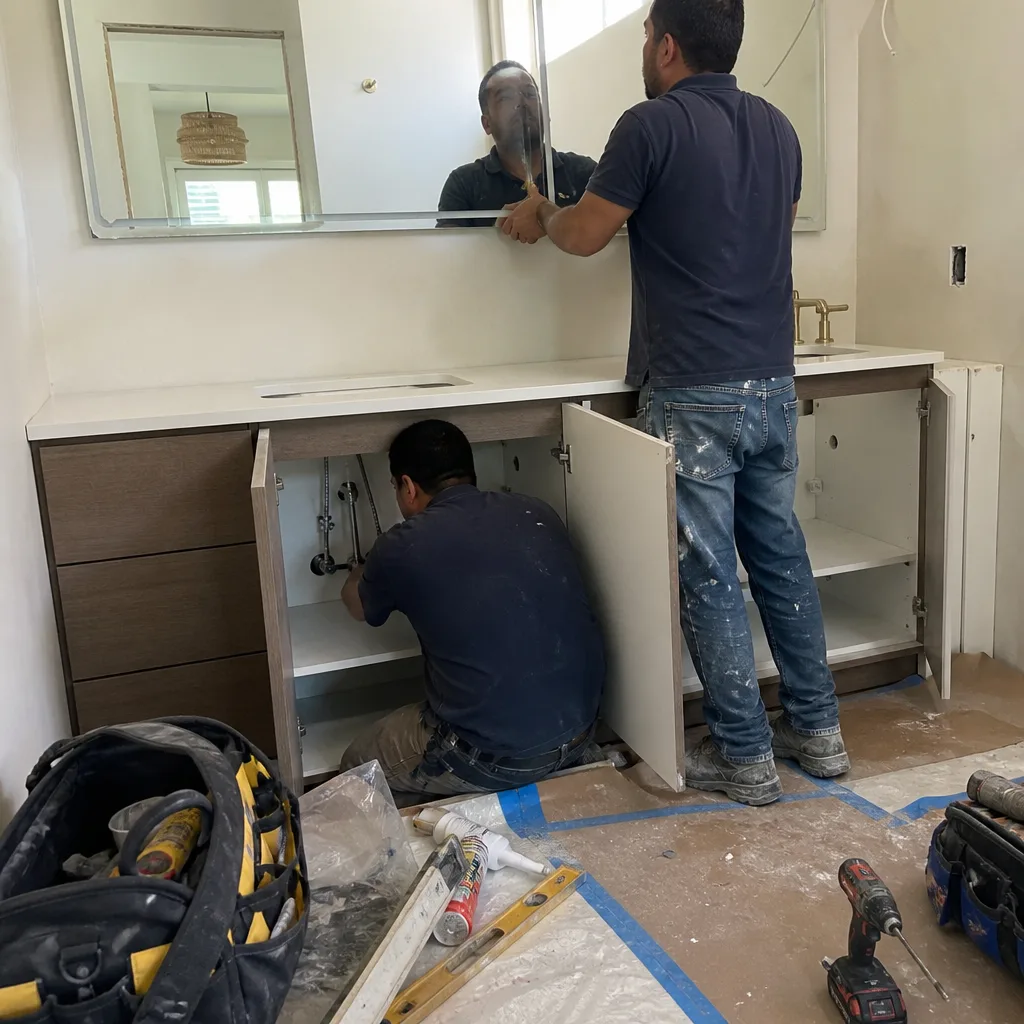
Beyond the core checklist, specific materials common in Fort Lauderdale kitchen remodels need targeted attention.
James Hardie Backsplash or Accent Panels
James Hardie fiber cement products are increasingly used as backsplash materials or accent panels behind ranges. The material is dimensionally stable and moisture-resistant, but the painted surface requires different care than tile. Clean with mild detergent only - abrasive cleaners scratch the factory finish and create entry points for humidity. Inspect annually for paint film integrity; touch up with James Hardie ColorPlus touch-up kits, not generic paint, to maintain the warranty.
Cambria and Caesarstone Quartz Surfaces
Both brands specify that their products are “maintenance-free” in marketing materials, which we find misleading in coastal environments. The resin binder is susceptible to UV degradation and thermal shock. In Fort Lauderdale kitchens with western exposure, we’ve documented yellowing near window-adjacent countertops after 4-5 years. The preventive measure is simple: close blinds or shades during peak afternoon hours. Document this practice in your maintenance log.
Under-Cabinet LED Lighting
LED drivers (the transformers that convert line voltage to LED power) generate heat and are often installed in confined cabinet spaces. In humid environments, this heat accelerates corrosion on terminal connections. Quarterly, turn off power at the breaker and inspect driver housings for discoloration or moisture staining. If the driver is mounted inside a cabinet box, consider relocating it to a ventilated soffit - a modification we now specify as standard in kitchen remodeling in Fort Lauderdale projects.
Sliding Windows and Pass-Throughs
Many Fort Lauderdale kitchens include pass-through windows to outdoor kitchens or patios. The sill and track assembly is a humidity trap. Monthly, vacuum the track and wipe with a dry cloth - moisture plus organic debris equals mold in 48 hours. Lubricate rollers annually with a silicone-based product, not petroleum grease (which attracts dust and hardens in salt air).
Common Mistakes to Avoid
- Using vinegar on stone countertops. The acidity etches calcium-based stones (marble, limestone, some granites) and degrades sealer films. In Fort Lauderdale’s humidity, etched areas become moisture collection points that stain permanently.
- Ignoring the toe-kick zone. The 4-inch space beneath lower cabinets is where floor moisture concentrates and where the first signs of cabinet base degradation appear. Most homeowners never look there until the cabinet floor is soft.
- Assuming “quartz doesn’t need sealing” means “quartz needs no maintenance.” The resin binder benefits from periodic treatment, and the surface still requires proper cleaning to prevent film buildup that dulls appearance.
- Re-caulking over old caulk without complete removal. New silicone will not bond to old silicone. The joint fails again in 3-6 months, and the layered buildup becomes unsightly. Remove completely with a plastic scraper and mineral spirits before reapplication.
- Running the exhaust fan only when smoke is visible. The fan’s job is humidity control, not just smoke removal. In Fort Lauderdale, run it for 20 minutes after any cooking activity, and during dishwashing if the kitchen lacks a dedicated dishwasher exhaust.
- Failing to document “no issues found.” Insurance adjusters and buyers value negative documentation - proof that you inspected and found nothing - almost as much as positive findings. A log with gaps invites skepticism.
- Using mainland maintenance schedules. A guide written for Chicago or Phoenix assumes different humidity, different temperature swings, and different salt exposure. Adapt every interval downward for Fort Lauderdale’s coastal conditions.
When to Call a Professional
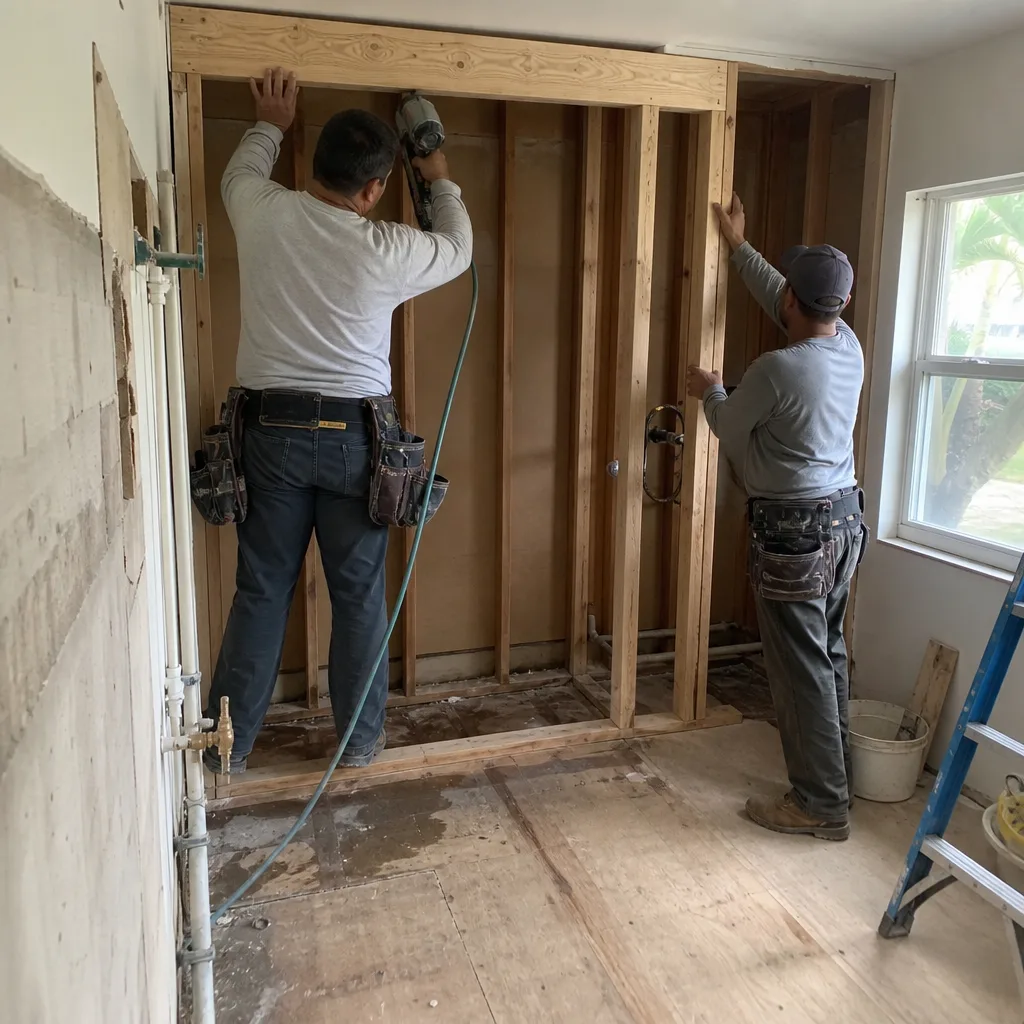
Some conditions indicate underlying problems that homeowner maintenance cannot address. Call a qualified contractor if you observe:
- Grout joints cracking in a pattern that follows wall studs or floor joists - this indicates structural movement, not installation defect.
- Multiple cabinet doors that no longer close properly simultaneously - suggests foundation settlement or moisture intrusion in the wall behind.
- Any electrical outlet near water sources with visible corrosion or that trips repeatedly - safety hazard requiring immediate professional evaluation.
- Countertop seams opening wider than 1/8 inch - the substrate or support structure has shifted, and the repair requires disassembly.
- Persistent mold or mildew despite proper ventilation and cleaning - indicates concealed moisture source that must be located and eliminated.
Rowan Construction Group Fort Lauderdale offers free estimates in Fort Lauderdale - call (754) 254-7676. Under Clause 1 of The Haven Standard, you’ll receive a written price before any work starts, and our documented photo record will show you exactly what we found and what we recommend.
Frequently Asked Questions
Annual maintenance materials for a typical 200 square foot kitchen run $150-$400, depending on countertop material and sealer selection. Professional inspection and maintenance service, if you prefer not to perform the work yourself, typically ranges $300-$600 per visit. Call (754) 254-7676 for an exact quote - estimates are free.
At Rowan Construction Group Fort Lauderdale, no. Under The Haven Standard, the written price we provide before work begins is the price you pay. No change proceeds without a signed change order, which is the discipline that has kept our projects within a few percent of the agreed cost across 4,000-plus jobs since 2007.
Every 12-18 months with a high-quality silicone-based sealer such as Tenax Hydrex or Aqua Mix Sealer’s Choice Gold. In homes within 0.5 miles of the ocean or with chronically high indoor humidity, reduce to 10-12 months. The water-bead test - sprinkle water and observe whether it beads or darkens the stone - is your field indicator; perform it every 6 months.
Pure maintenance - cleaning, sealing, caulking, hardware tightening - does not require permits in Fort Lauderdale. If maintenance reveals conditions requiring electrical, plumbing, or structural modification, those specific trades may require permitting. We pull all required permits and pass all inspections as standard practice on any work we perform.
Target 45-55% relative humidity year-round. Below 40% risks wood shrinkage and joint opening; above 60% accelerates mold growth and finish degradation. In Fort Lauderdale, dehumidification is typically the challenge - your air conditioning system should maintain this range when properly sized and maintained. Standalone dehumidifiers may be needed in kitchens with high ventilation or frequent door-opening to outdoor spaces.
A properly executed kitchen remodel with quality materials should require only the routine maintenance described in this guide for 15-20 years. Major component replacement - countertops, cabinets, appliances - becomes economical at different intervals. We’ve documented kitchen remodeling in Fort Lauderdale projects from 2008-2010 that remain in excellent condition with consistent maintenance, and projects from 2015-2017 that required significant intervention due to neglected care or incorrect material specification for the coastal environment.
The Bottom Line
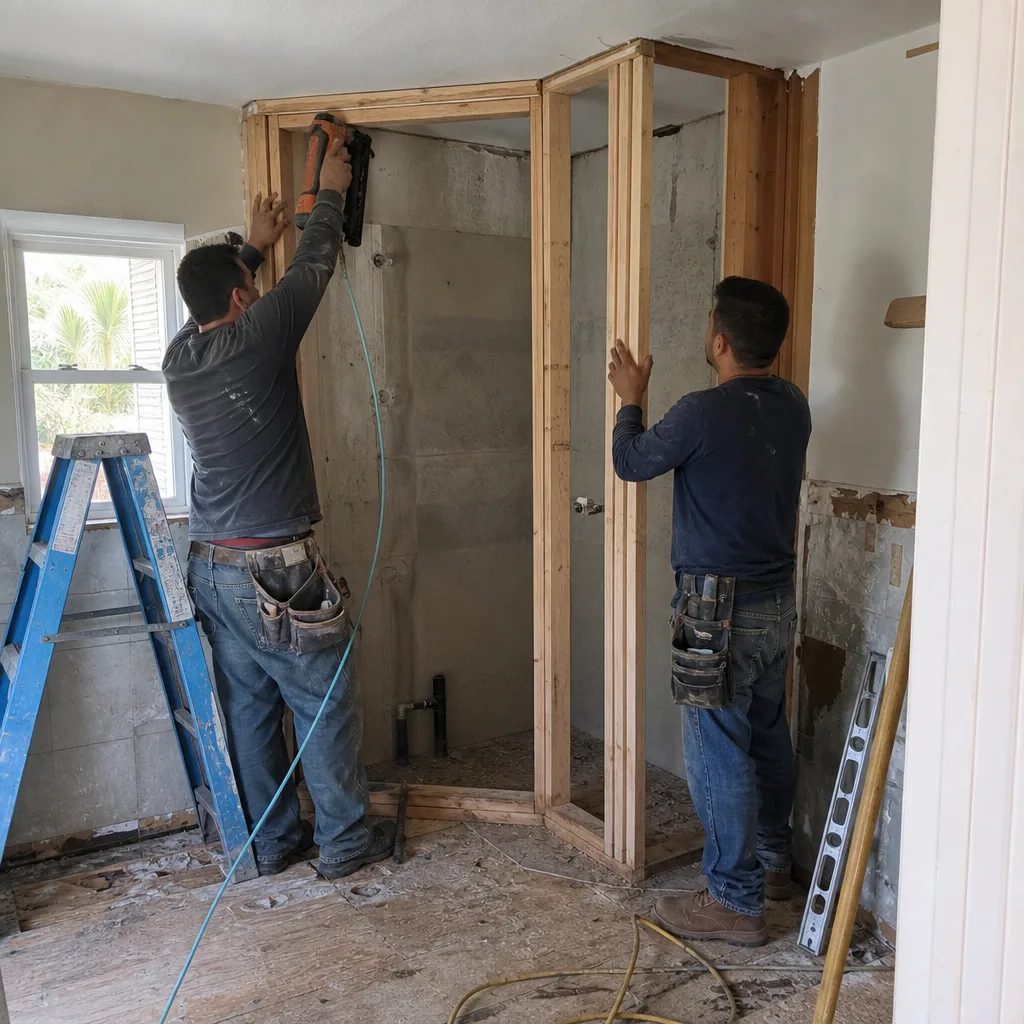
The first 18 months after your kitchen remodel is complete is a diagnostic window, not a honeymoon period. In Fort Lauderdale’s coastal environment, salt-laden humidity and thermal cycling stress every joint, finish, and mechanical connection at rates significantly above inland norms. A structured inspection schedule - monthly for the first three months, then at critical intervals through month 18 - catches installation defects before they become expensive failures and establishes the documentation baseline that protects your investment for resale or insurance purposes. The specific products matter: silicone-based sealers with documented moisture resistance, cabinet finishes selected for coastal suitability, and exhaust fans rated for actual kitchen volume, not code minimum. The discipline matters more: inspect, document, repeat. That’s the maintenance approach that separates kitchens that age gracefully from kitchens that age expensively.
Written by Grant Rowan, Owner at Rowan Construction Group Fort Lauderdale, serving Fort Lauderdale since 2007.